 Call Us : +8613776256460Call Us : +8613776256460
 English
 Spanish
 French
 German
 Italian
 Chinese (Simplified)
 Japanese
 Korean
 Arabic
 Portuguese

 Send Inquiry
CRYOGENIC GLOBE VALVE DJ NPT
MOQ : 100 Kilograms
CRYOGENIC GLOBE VALVE DJ NPT Specification
- Application
- Cryogenic Service, Liquid Oxygen, Nitrogen, LNG, Industrial Gases
- Control System
- Hand Operated
- Noise Level
- Low
- Automatic Grade
- Manual
- Size
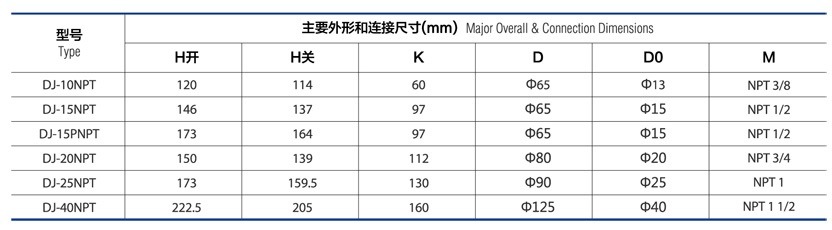
- 1/2 inch to 2 inch
- Processing Type
- Forged
- Material
- Stainless Steel / CF8 / CF8M
- Color
- Metallic Silver
- Capacity
- Suitable for Cryogenic Applications
- Weight
- Varies by Size
- Thickness
- Body Wall as per ASME B16.34
- Body Design
- Angle / Straight Type Globe Valve
- Seat Type
- Soft Seat / Metal Seat
- Temperature Range
- -196°C to +80°C
- Testing Standard
- API 598 / BS 6755
- Bonnet Type
- Extended Bonnet for Cryogenic Service
- Leakage Class
- Class VI or as specified
- Pressure Rating
- Class 150 - Class 800
- Operation
- Rising Stem with Outside Screw & Yoke
- End Connection
- DJ NPT (Double Jointed National Pipe Thread)
CRYOGENIC GLOBE VALVE DJ NPT Trade Information
- Minimum Order Quantity
- 100 Kilograms
- Payment Terms
- Telegraphic Transfer (T/T)
- Supply Ability
- 50 Kilograms Per Month
- Delivery Time
- 7 Days
- Sample Available
- Yes
- Sample Policy
- Contact us for information regarding our sample policy
- Main Domestic Market
- All India
About CRYOGENIC GLOBE VALVE DJ NPT
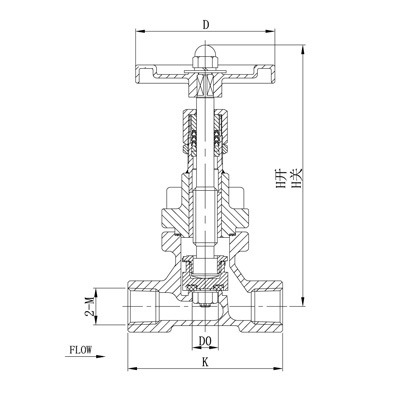
Nominal Pressure: 4.0Mpa
Design Temperature: -40AAAA A12A+80AAASuitable Media: O2, N2, Ar, NG,A CO2
Materials of Main Parts:
Body, Cover: CF8
Disc, Stem: S30408
Disc Seals: PTFE
Precision Engineered for Cryogenic Safety
This valve is meticulously designed for cryogenic environments, ensuring safe operation even under extreme temperatures. The extended bonnet and robust forging process enhance durability and insulation, making it dependable for handling substances like liquid oxygen and LNG.
Flexible and Reliable Material Choices
Crafted from high-quality stainless steel, CF8, and CF8M material, this globe valve offers excellent corrosion resistance and longevity. Its metallic silver finish and adherence to ASME B16.34 standards guarantee stability and safety in volatile cryogenic conditions.
FAQ's of CRYOGENIC GLOBE VALVE DJ NPT:
Q: How does the DJ NPT end connection benefit installation in cryogenic systems?
A: The Double Jointed NPT end connection allows for secure and leak-resistant assembly, simplifying installation and maintenance in cryogenic pipelines. It provides a reliable seal, which is critical for handling cold gases safely.Q: What is the recommended process for selecting between soft seat and metal seat types?
A: Soft seats are best for applications requiring tight shut-off and low leakage, while metal seats are preferable for conditions with higher temperatures, pressures, or abrasive media. Selection depends on your specific operational environment and required leakage class.Q: Where can the CRYOGENIC GLOBE VALVE DJ NPT be used?
A: This valve is suitable for industrial installations dealing with liquid oxygen, nitrogen, LNG, and various industrial gases. It is widely used in cryogenic service facilities and processing plants worldwide, including China.Q: When should I specify an extended bonnet for my globe valve?
A: An extended bonnet should be specified when the valve will operate at very low temperatures (down to -196C). It prevents heat transfer to the stem, reducing the risk of malfunction or leakage caused by thermal contraction.Q: How does the valve's testing to API 598 and BS 6755 standards ensure quality?
A: Testing to API 598 and BS 6755 verifies the valve's integrity, leak tightness, and structural performance, assuring users that the valve will perform reliably under specified conditions and meets global safety requirements.Q: How is manual, hand-operated control advantageous in cryogenic applications?
A: Manual control offers precise regulation of flow and is reliable in low-temperature environments, where automated systems may be less effective. It allows operators to respond quickly to process demands and maintain operational safety.Q: What are the main benefits of using forged stainless steel for the valve body?
A: Forged stainless steel provides exceptional strength, improved wall thickness per ASME B16.34, and enhances resistance to corrosion and thermal stress, resulting in longer service life and better performance for cryogenic duties.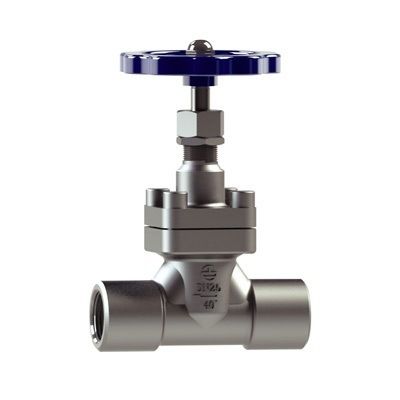
Tell us about your requirement

Price:
Quantity
Select Unit
- 50
- 100
- 200
- 250
- 500
- 1000+
Additional detail
Mobile number
Email

More Products in Cryogenic Globe Valve Category
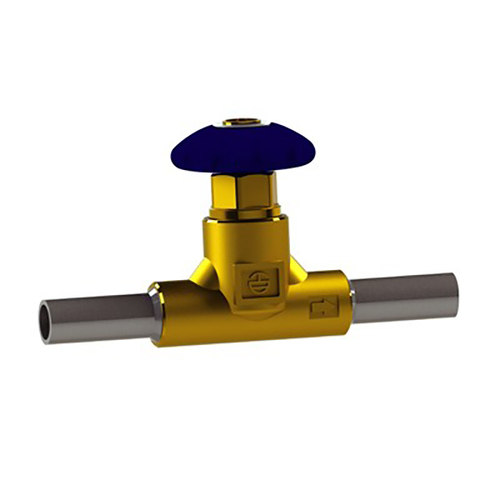
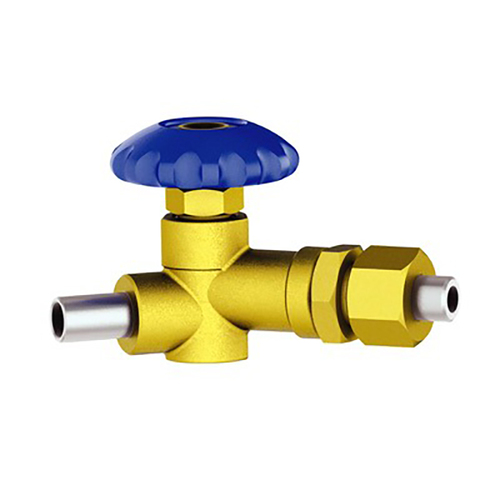
cryogenic globe valve DJ 15P6 P10
Price Range 10.00 - 100.00 USD ($) / Piece
Minimum Order Quantity : 1 Piece
Application : Cryogenic Service, LNG, Liquid Nitrogen, Oxygen, Argon
Control System : Handwheel Operated
Noise Level : Low
Automatic Grade : Manual
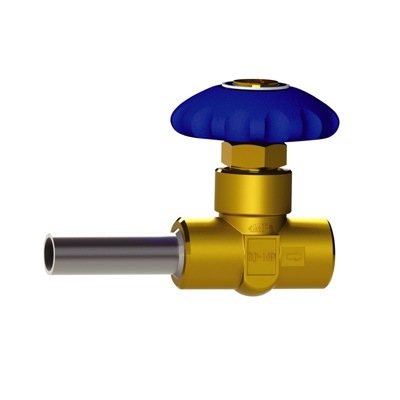
cryogenic globe valve020
Price Range 10.00 - 100.00 USD ($) / Piece
Minimum Order Quantity : 1 Piece
Application : Cryogenic Liquid, LNG, Liquid Nitrogen, Oxygen, Argon Systems
Control System : Handwheel Operated
Noise Level : Low
Automatic Grade : Manual
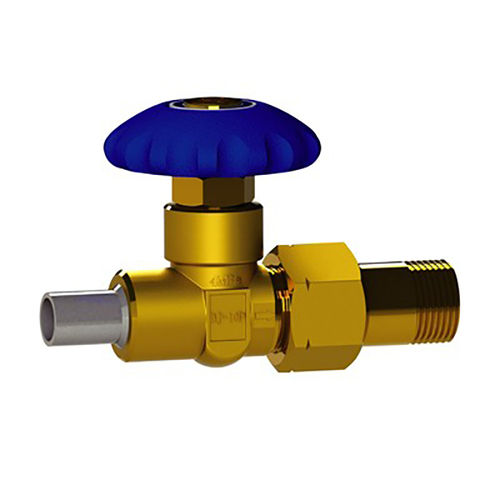
CRYOGENIC VALVE DJ 10PH PH1
Price Range 10.00 - 100.00 USD ($) / Piece
Minimum Order Quantity : 1 Unit
Application : LNG, Liquid Nitrogen, Cryogenic Storage
Control System : Hand Operated
Noise Level : Low
Automatic Grade : Manual
cryogenic globe valve DJ 10PL 008
Price Range 10.00 - 100.00 USD ($) / Piece
Minimum Order Quantity : 1 Piece
Application : Cryogenic fluids control (Liquid Oxygen, Nitrogen, LNG, etc.)
Control System : Hand operated
Noise Level : Low
Automatic Grade : Manual

Address
ZHANGJIAGANG GRANDE MACHINERY CO., LTD
- B No.8, North Zhenxing Road, Yangshe Town, Zhangjiang, Shanghai - 215600, China
- Phone :86-512-58987829
- Send Inquiry
 Send Inquiry
 Send Inquiry
 |
ZHANGJIAGANG GRANDE MACHINERY CO., LTD.
All Rights Reserved.(Terms of Use) Developed and Managed by Infocom Network Private Limited. |
